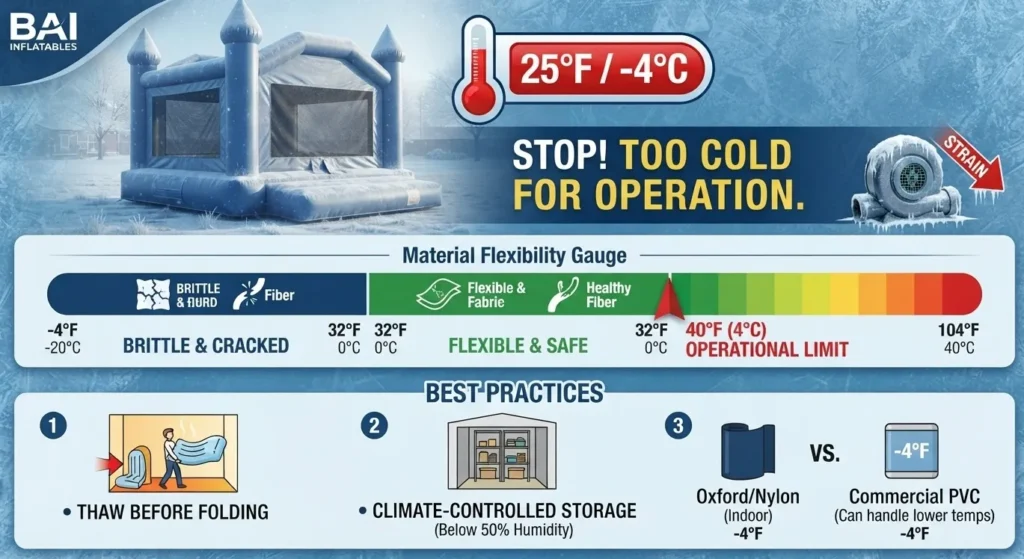
Temperatures below 40°F (4°C) are generally too cold to safely operate or handle Oxford and nylon fabric inflatables.
Temperature Thresholds for Oxford & Nylon Inflatables
- Operational Limit: 40°F (4°C) is the recommended minimum operational threshold.
- Material Flexibility Range: Oxford fabric and standard nylon maintain their best flexibility between 32°F and 104°F (0°C to 40°C).
- Freezing Point (32°F / 0°C): Below freezing, the synthetic fibers and waterproof polyurethane (PU) or PVC coatings on Oxford and nylon lose their elasticity. The material stiffens, becomes brittle, and cracks or tears easily under stress, body weight, or pressure.
Risks of Cold-Weather Use
- Fabric Cracking: Frozen nylon and Oxford cloth lose tensile strength. Folds or impacts at sub-freezing temperatures can cause permanent rips in the weave.
- Moisture Damage: Nylon and Oxford fabrics absorb minor amounts of moisture or collect condensation. If operated in sub-freezing weather, this trapped water freezes, swelling the fabric and destroying the seams or waterproof coating.
- Blower Strain: Cold air forces the electric blower motor to work harder. Intake air below freezing can cause internal condensation or sluggish performance in the motor.
Best Practices for Cold Weather
- Do Not Fold When Frozen: If an inflatable is exposed to cold/freezing temperatures, let it thaw completely and dry indoors before folding or rolling it. Folding frozen synthetic fabric breaks the fibers.
- Storage Conditions: Store Oxford and nylon inflatables in a dry, climate-controlled space where the humidity stays below 50%.
- Alternative Materials: Heavy-duty commercial PVC tarpaulin can handle lower temperatures (down to -4°F / -20°C), but lightweight residential Oxford and nylon structures must be brought inside during freezing or snowy conditions.